


Owning the Story: How Two Harlem Retailers Use Shopify to Scale Black-Led Culture

Updated: Aug 23
As commerce shifts online, it’s easy to think of “e‑commerce” as something that lives on screens and in dashboards. But for two Harlem retailers Thierno Diallo, Co‑Founder of Cap USA, and Farouk Zakkour, Owner of CAPSULE NYC, Shopify isn’t just a tech stack. It’s the infrastructure that lets them turn decades of neighborhood trust into businesses that now reach customers across the city and around the world, without losing the soul of where they started.

On a vibrant night in SoHo, inside a room full of creatives, entrepreneurs, and neighbors, Jordan Michael Pierre sat between Thierno and Farouk for a live conversation about legacy, ownership, and the future of retail. What unfolded wasn’t just a panel, it was a living blueprint of how Black entrepreneurs are building businesses that hold culture, history, and community at the center.
From the start, the conversation was about more than fashion. Jordan framed it around inheritance. Not just of money or assets, but of blueprints. For Thierno, Cap USA is exactly that: a blueprint passed down from his parents, refined and reimagined through his own hands. His parents started with a stand on the corner of 125th street In Harlem, then a storefront, and eventually a name, Cap USA, that was less about branding and more about truth. They sold hats, and they served the neighborhood. Over time, that practicality became identity. Cap USA turned into a destination, the kind of place where people knew they could walk in and find options that felt like them.
Photos: Jay Kimble
“Nothing really starts in my journey without my parents,” Thierno reflected. “They laid the blueprint, and I'm just taking what they gave me and putting my touches to it. This isn’t really mine. This is my family.”
Farouk’s path took a different route to a similar destination. He didn’t land in New York dreaming of fashion. He arrived in the U.S. in 2000 to become a pilot, earned his degree in aeronautics, and even got his commercial pilot license. But in the cockpit, with the door shut behind him, he realized the quiet didn’t match his spirit. The dream he was chasing, he discovered, belonged to his father. Fashion was the part of his life that felt like his own.
His gateway was a historic New York store, Sammy’s Fashions, where he started as a salesperson. From the floor, he learned how to buy product, read customers, and understand timing. He helped the store develop relationships with brands, saved his money, and eventually opened his own space on 125th Street. That first CAPSULE NYC location in Harlem has now stood for eleven years, joined by a Bronx store and a Brooklyn expansion on the way.

Both stories intersect at a crucial point: what it means to build in neighborhoods under pressure. Jordan didn’t shy away from naming it.. Gentrification, displacement, rising rents, and the quiet erasure of places that once held the soul of a community. Against that backdrop, Cap USA and CAPSULE NYC aren’t just stores. They’re anchors.
For Farouk, that anchoring began with a simple but radical premise: access. He recalled the days when certain luxury brands weren’t available uptown. If someone from Harlem wanted a Ferragamo belt, they’d have to go downtown, walk into spaces where they were often watched, questioned, or outright disrespected. He remembered a story about a young Black woman who bought a Ferragamo belt at Barneys and was chased down because staff assumed she’d stolen it. That story stayed with him. If he could be the person to bring those brands uptown to create a space where people could shop for the same items without being scrutinized, he felt an obligation to do it.
Thierno’s answer to gentrification is rooted in presence. For him, the storefront is a living conversation. Standing in the shop, talking with customers, asking what they like and don’t like. That, he says, is the real data. In an era obsessed with dashboards and analytics, he sees the greatest advantage as proximity. When someone walks into Cap USA, he’s not just selling to them; he’s learning from them. Every conversation is feedback. Every repeat visit is a relationship.

That closeness to the customer is also how they navigate the tension between honoring culture and following trends. Jordan pointed out how quickly new styles and sounds surface, almost weekly and asked how they keep from losing themselves in the noise.
In the early days, Thierno designed around what he thought was "hot". The learning curve came when he realized his taste alone wasn’t enough. The stronger move was to listen. Friends from high school, family, regulars from the block. It was their input layered with his own sensibility, that gave Cap USA its edge. Over time, he stopped trying to chase trends and began to set them, using Instagram and social media as tools, not masters.

Farouk’s approach is equally grounded but filtered through a wider lens. He still works the floor, rings up customers, checks inventory, and uploads product photos. He also attends fashion weeks in Milan and Paris, watching trends form before they fully translate stateside. Sometimes they start there and end up here. Other times, the spark comes from Harlem and the Bronx. His advantage is that he stands at the intersection of both worlds and sees how ideas move between them.
Technology, for both men, became a bridge rather than a replacement for human connection. Shopify sits at the center of that shift. Before adopting it, CAPSULE’s systems were clumsy: an item could sell online only for staff to discover that it had already left the rack in‑store. That meant refunds, frustration, and friction that chipped away at trust. With Shopify, Farouk could finally sync inventory in real time and plug into a network of sales channels and apps. Today, CAPSULE NYC runs everything from online drops to Uber‑powered local delivery, making it possible for customers in the metro area to get product in roughly an hour.
Thierno’s e‑commerce story is more survivalist. He started with Wix because it looked simple, but quickly found that “simple” didn’t mean scalable. Uploading products was tedious, and the platform got in his way more than it helped. It was Farouk who nudged him toward Shopify and walked him through how to set it up. That mentorship became critical in 2020, when COVID forced the gates of the physical store down for months while the rent clock kept ticking. With no foot traffic, the business had to live online.
Photos: Jay Kimble
He and his team spent those months inside a closed shop, heads down, packing hats into boxes, printing shipping labels on regular paper before they even knew label printers existed, and running drops that would become part of Cap USA’s lore. They didn’t wait for a wave, they created one. Social media amplified it, Shopify powered it, and the community validated it.

When Jordan steered the discussion toward ownership, specifically Black ownership in a world where Black culture drives global trends but often doesn’t control the pipelines of distribution, both men went deeper. For Farouk, ownership starts with an unglamorous commitment: loving the work more than the reward. If you truly love what you do, you’re willing to grind through the uncelebrated parts. The real payoff, for him, isn’t just the revenue, it’s the story. If decades from now someone recognizes him and remembers what he built, that’s success. In his mind, if the story is strong, the money follows.
Thierno has reached a point where the creative work via designing hats by putting colors together is just a slice of his joy. What excites him now is building teams, putting systems in place, hosting activations, and watching other people grow inside the ecosystem he’s helped shape. His understanding of ownership has expanded beyond product into people, process, and legacy. Running the business well, creating opportunities, and establishing something that can outlast him that’s where he locates his fulfillment.
None of this came without difficult internal shifts. When Jordan asked them to name a hard lesson they had to unlearn to become the men they are, the answers were layered with vulnerability. For Thierno, the enemy has always been rushing. He spoke openly about wanting to move faster than the process would allow. Trying to take three steps before the first one. Looking back, he noticed a pattern: each year, he and the people around him got better. Growth was steady, not explosive. Some of his biggest milestones, like finally securing the right store, didn’t happen on his timetable, but on what he described as God’s. Over time, patience shifted from something forced on him into something he claimed as a strength.
Farouk’s hard lesson runs through faith and discomfort. He talked about planning a ten‑year anniversary celebration for his Harlem store, only to have the store catch fire a month before the event.

It was a stark reminder that nothing in business is guaranteed. Not your space, not your momentum, not your timeline. For him, the only constants are God and the willingness to keep moving. There are always new competitors eyeing his brands, new big box players flirting with his customers, new markets calling for expansion. The job, in his view, is to stay alert, keep learning, and never assume that yesterday’s work will carry tomorrow’s load.
Taken together, the stories of Cap USA and CAPSULE NYC sketch out a vision of retail as more than commerce. These are spaces where culture is protected and projected, where young designers test their ideas, where neighbors gather, where Harlem and the Bronx assert their influence on the wider world. They’re powered by Shopify and social platforms, but the foundation is still human: families who took risks, children who honored those risks by building further, and communities that show up, again and again, to support what reflects them.
For Shopify, Thierno and Farouk’s journeys are a reminder of what the platform is really for: not just enabling transactions, but amplifying the work of merchants who carry their neighborhoods on their backs. From corner stands to multi-location storefronts, from handwritten labels to synchronized inventory and same‑day delivery, their stories show how commerce technology can scale a business without stripping away the community that made it possible.
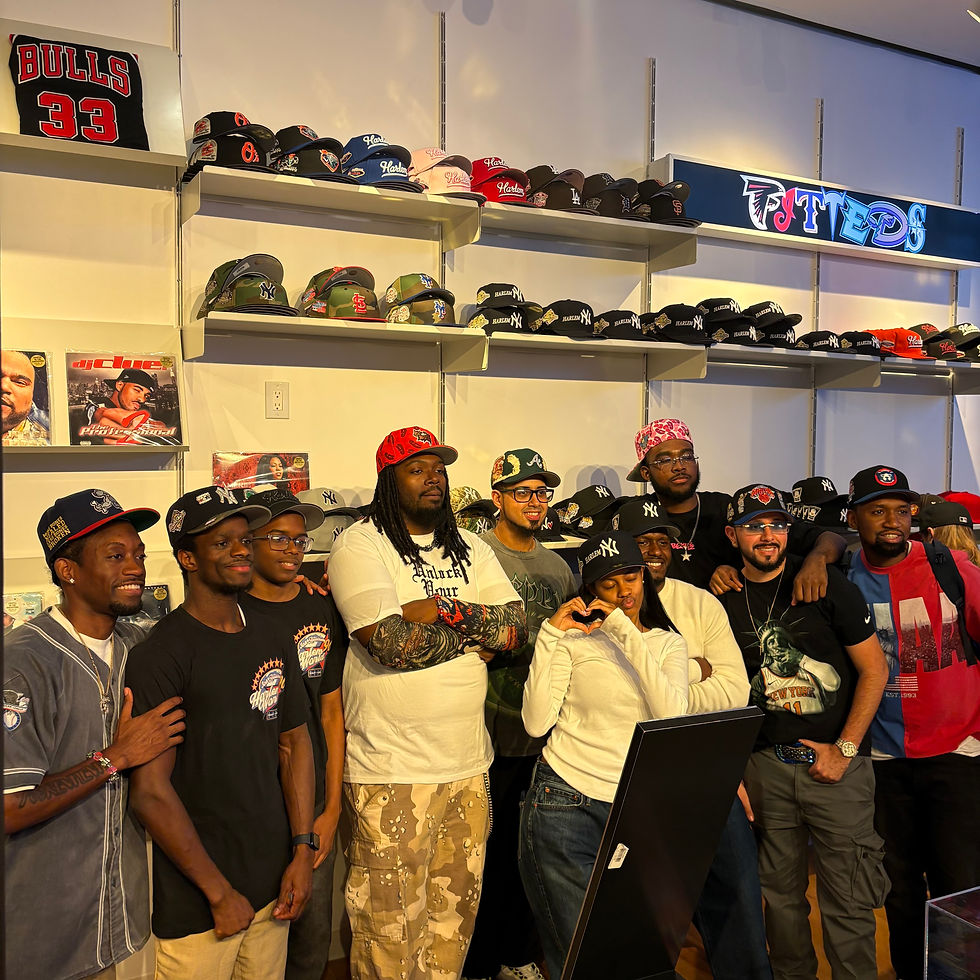
What they are building are not just stores. They are institutions + living proof that when Black entrepreneurs own their narratives, their systems, and their distribution, they don’t just participate in culture. They shape it, sustain it, and pass it on.


Comments